Key takeaways
- Pain generated in the upper neck is frequently felt in the back of the head, the temple, or behind one eye. Clinicians call headache of that kind cervicogenic, meaning it originates in the neck.
- The upper neck is where a crash concentrates force, and it is the region an injury exam spends the most time on.
- An exam checks motion, tenderness, and the neurological basics. It is hands-on and unhurried, and it is different from a scan.
- You cannot sort this out from a webpage. You can get it sorted out in an exam this week.
This desk has one editorial position, and this reading is the anatomy behind it. The position is that headaches which begin after a crash very often travel with a neck injury that never got examined. Here is why the neck is the suspect, in plain words, without pretending to diagnose anyone.
Where the force went
In most crashes, the head is not what gets hit. The car is. The seat pushes the torso one way, the head lags for a fraction of a second, and the neck is the lever that catches up. Whatever the direction of the hit, the neck absorbs the motion the skull was spared. That is why the neck is stiff on Tuesday even when nothing touched it on Saturday.
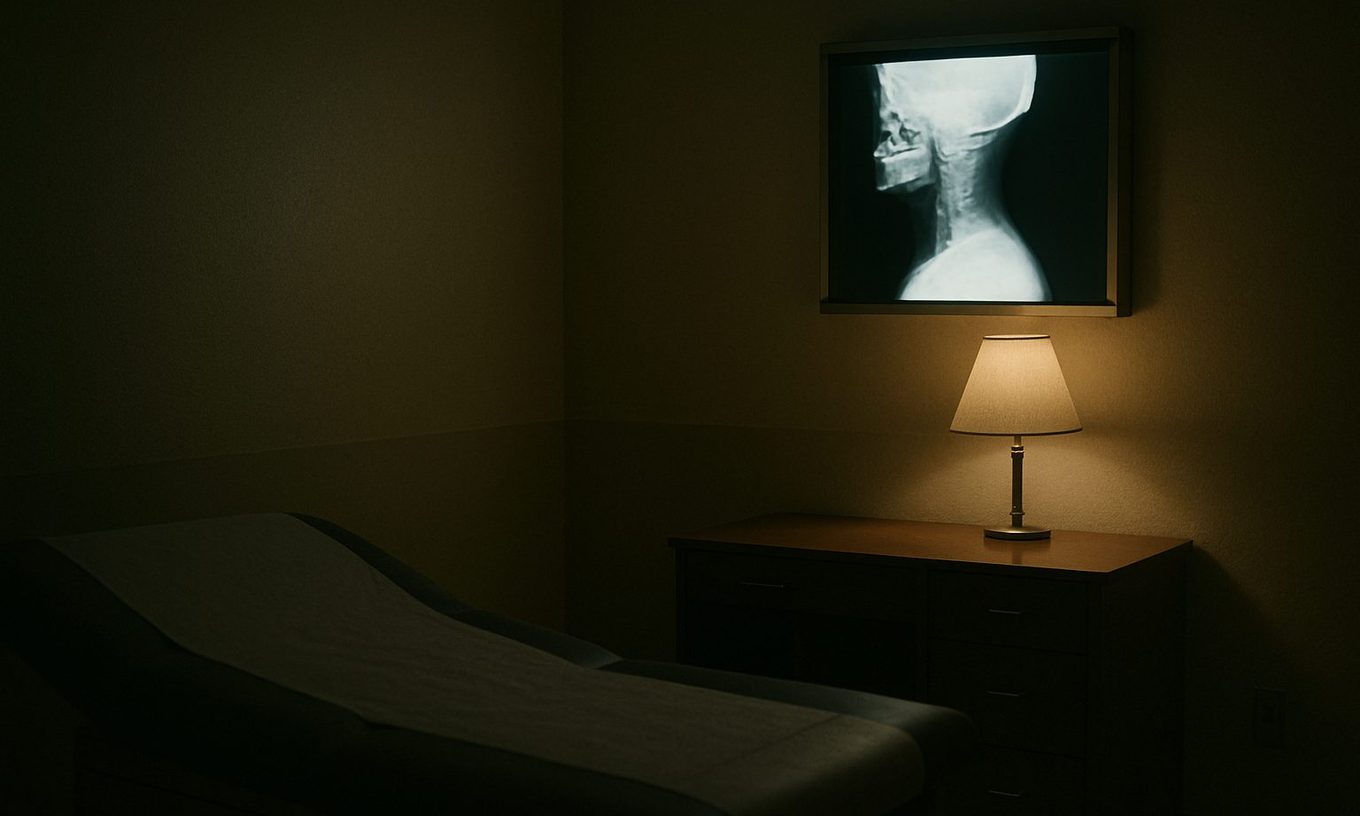
The top of the neck is the part that moves the most and has the least protection. The joints there let you nod and turn. The small muscles there keep your head level without you thinking about it. After a crash they tighten, guard, and swell, and that is where the headache begins.
How neck pain turns into head pain
The upper neck and the back of the head share nerve pathways. Sensation from the top few joints of the neck and sensation from the scalp arrive at the same place in the nervous system, and the brain is not always careful about which is which. Pain that starts in a swollen upper-neck joint can be felt in the back of the skull, over the top of the head, or behind one eye. The NINDS overview of headache lists headaches that follow trauma and headaches that arise from neck structures as recognized categories, which is the only claim we need to make here: the pattern is real and it is described by a source that is not selling anything.
From the inside, a neck-generated headache can feel a great deal like the migraine people already know: one-sided, made worse by light and screens, relieved by lying still in the dark. The differences are the kind an examiner finds by hand. Does turning the head reproduce it? Is there a tender point at the base of the skull that brings the headache on when pressed? Is the neck's motion limited on one side? Those are exam questions, not search questions.
Why the neck gets examined last
Three reasons, all ordinary. First, the headache is louder than the neck, so that is what people describe. Second, the emergency room, rightly, is looking for the dangerous things: bleeding, fracture, stroke. Once those are ruled out, a sore neck is sent home with instructions to rest. Third, people treat a headache as a headache, with the tools they have for headaches, and the neck is never mentioned to anyone.
None of that is wrong. It is simply a gap, and the gap is what this desk exists to name. An injury exam fills it by treating the head and neck as one injured region, which is what they are after a crash.
What an injury exam actually checks
Without putting words in any clinician's mouth, a first exam after a crash generally covers a history of the crash and the symptoms since, a look at how the neck moves in each direction, hands-on checks for tenderness and guarding, and the neurological basics: reflexes, strength, sensation, eye movement, balance. If the findings call for imaging or a different specialty, a straight answer about that is part of the visit.
Missouri Injury Clinic describes its auto-injury lane as diagnosis and a treatment plan after a crash. For our readers the relevant part is that a documented exam with dated findings is what that produces, and that any post-crash exam generally covers the head and the neck, since the two are hard to separate after a wreck. We cover the logistics on the getting seen page.
What you can do before the exam
Notice which side. Notice whether turning to check a mirror brings it on. Notice whether pressing at the base of the skull changes anything. Do not treat the neck yourself beyond gentle movement and rest; the point of noticing is to have something concrete to tell the examiner, not to self-manage an injury you cannot see. Write it down in the log with a date.
Educational reading, not medical advice. This desk cannot examine anyone; it exists to get you in front of someone who can.